



profile
A Culinary Legacy
BY TARYN WHITE
Edna Lewis put Southern Cooking on the World Stage.
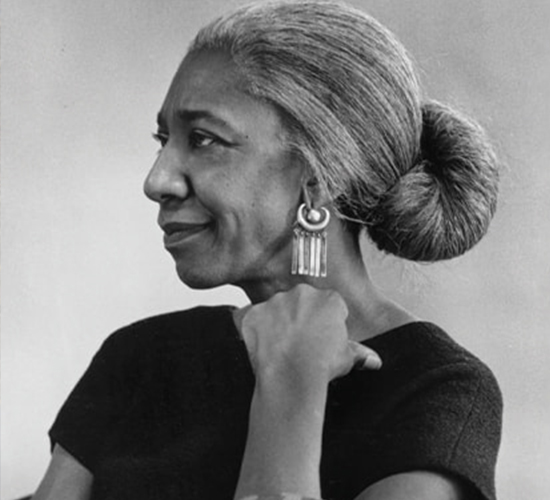
Edna Lewis Was More than a Chef.
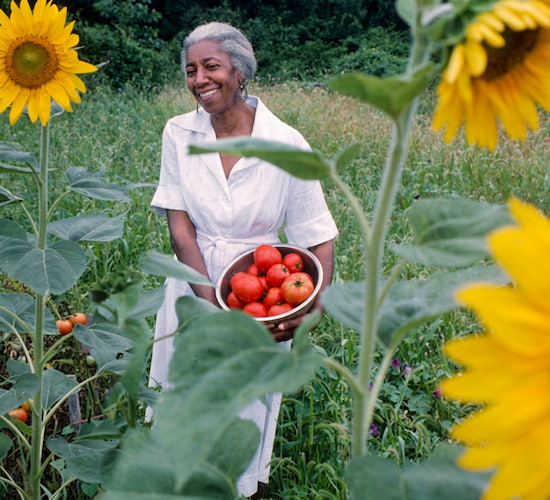
She was a trailblazer of American foodways, championing seasonal Southern cooking as one of the world's great cuisines. Born in 1916 in Freetown, Virginia, Lewis grew up in an African American farming community co-founded by her emancipated grandfather after the Civil War. Her upbringing shaped her enduring connection to the earth, the seasons, and the traditions of Southern food.
In her highly acclaimed cookbook "The Taste of Country Cooking," Lewis didn't just share recipes. She painted vivid portraits of sassafras tea, foraged berries and the sounds of whip-poor-wills at twilight. Her recipes were love letters and stories of land, lineage and liberation. As The New York Times noted last year, the book remains one of the most influential cookbooks of the past century.
Debra Freeman, a Richmond-based podcaster and food writer, believes Lewis' greatest impact lies in her cookbooks, which she regards as prototypes for those being published today: part memoir and part recipe. "Lewis was so far ahead of her time in allowing chefs to share more of themselves," Freeman explains. "The farm-to-table movement is commonplace and even expected now, thanks to Lewis. And for women chefs, she left a blueprint for how to keep the focus on the work." In 2025, Freeman released the Emmy-winning PBS documentary "Finding Edna Lewis," which follows Lewis' journey from the fields of Freetown to the streets of New York and beyond, weaving in insights from contemporary chefs and historians.
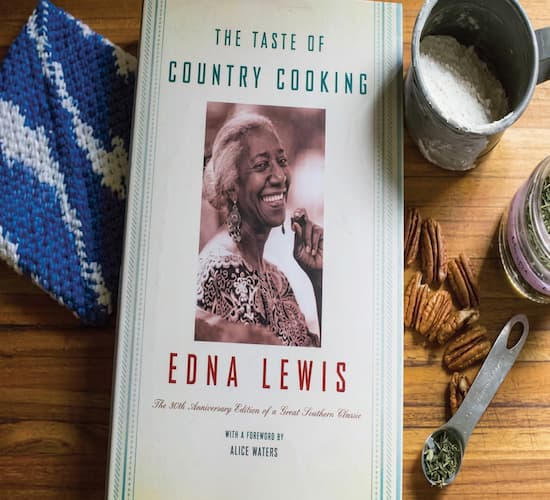
Building a Chef's Identity
Lewis first rose to prominence in the 1940s as chef and partner at Café Nicholson in New York, a groundbreaking achievement at a time when women, especially Black women, were rarely seen in such roles. After three years, she stepped away from the kitchen but remained a business partner, while expanding her career in new directions. She lectured at the American Museum of Natural History, built her reputation as a private caterer, and continued to shape her identity as a chef. Over the years, she moved between the North and South, taking on notable roles that included brief stints as chef at Fearrington House in North Carolina and Middleton Place in South Carolina.
Although Lewis was highly regarded in culinary circles and received accolades such as the James Beard Living Legend Award, the “Grande Dame” of Les Dames d’Escoffier, and even a posthumous U.S. postage stamp, she never became a household name. Freeman perceives this lack of broader recognition as stemming from several factors: her race, her limited access to a broad platform like television, and her soft-spoken demeanor.
Paying Tribute to a Legacy
But recent efforts have brought the iconic chef into the spotlight. In 2023, Orange County, Virginia, launched the Edna Lewis Menu Trail, followed in 2024 by the unveiling of a state historical marker commemorating her life near the former site of Freetown. At the 2025 Family Reunion at Salamander Middleburg, the panel discussion "Edna Lewis and the Legacy of a Black Woman Chef" also paid tribute to the legendary chef. Moderated by food journalist Cheryl Slocum, the panel opened with a prologue from Freeman, who introduced her documentary to the audience, and panelists Mashama Bailey, Carla Hall and Dr. Jessica B. Harris, who each shared insights about Lewis' impact on their professional paths.
Bailey, a two-time James Beard Award winner and the co-owner of The Grey in Savannah, Georgia, and the newly opened L'Ardoise in Paris, credits Lewis as a major influence on her career. Bailey noted during the panel discussion, "Lewis' voice continues to guide and inspire young chefs and food professionals who are still finding their own footing."
Bailey was one of those chefs. She first learned about Lewis while researching chefs who have inspired her for a college essay during her studies at the Institute of Culinary Education in New York. Lewis quickly became the focus of her essay, and more importantly, the chef whose values would continue to shape her own. Bailey even designed her menu at The Grey around Lewis' third cookbook, "In Pursuit of Flavor," dividing dishes into four elemental categories: dirt, water, pasture and pantry. Bailey is also the chair of the Edna Lewis Foundation, which supports Black chefs, farmers and food storytellers while carrying forward Lewis' farm-to-table philosophy.
Following in Lewis' Footsteps
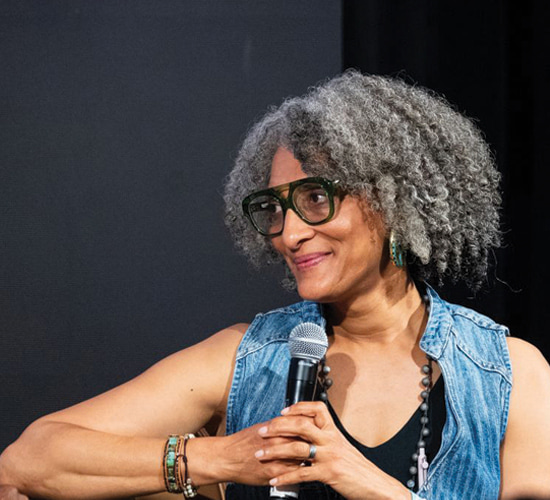
Celebrity chef, television host and author Carla Hall counts herself among those deeply shaped by Lewis’ legacy. In 2024, Hall became only the second Black woman to be named “Grande Dame” of Les Dames d’Escoffier. Remarking on the significance of following in Lewis’ footsteps, Hall shares, “As a Black woman chef, I really do feel like I’m standing on her shoulders. I’m grateful for her work and the path she carved. It matters so much to see someone who looks like you in the places you want to go, and it makes you believe you should be there, too.”
Hall admits she didn’t discover Lewis until later in her career. In 2011, she was invited to cook a dinner in Lewis’ honor, a moment that brought her face-to-face with Lewis’ sister, Ruth Lewis Smith. Preparing for that evening, Hall immersed herself in Lewis’ cookbooks and found herself captivated. “Her food felt so simple, confident and elegant,” Hall recalls. “It leaned toward a healthier take on Soul Food.”
For the dinner, Hall chose Lewis’ chicken and dumplings recipe, which she made with an older hen, using the chicken fat for the dumplings. When Lewis’ sister tasted the dish and offered her approval, Hall felt the weight of the moment. “That was huge for me,” she says. Hall began to see her own work as part of a larger continuum, stating, “Edna made space for Black women in food to be seen not just as cooks, but as artists, and, more importantly, as cultural keepers. To follow in her footsteps feels like carrying her spirit forward, while also carving out space for the women who will come after me.”
Culinary Discoveries
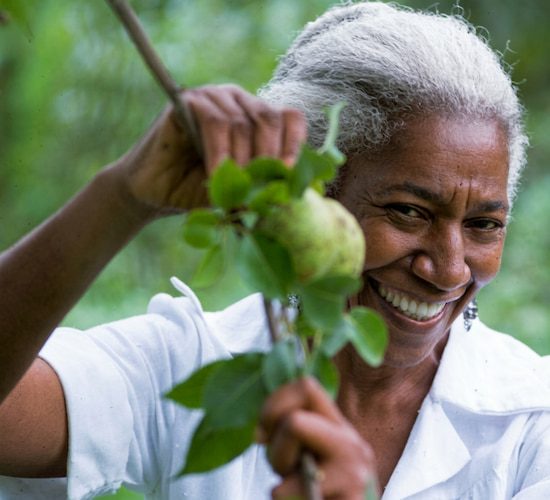
Like Hall, James Beard Award-winning food writer and editor Slocum also says she didn't learn about Lewis until later in her career. “I didn't know of her when I studied and worked in France, when I trained in restaurant kitchens, or even when I ran my first food editorial department and test kitchen, where I was the only Black person among my peers,” she recalls. “Discovering her later, I was moved by how fearless she must have been to have accomplished all that she did, and I hope every Black woman entering this field can know about Ms. Lewis’ accomplishments and bravery and be powered by her story as they embark on their careers.
Harris, acclaimed food historian, culinary activist, and author of “High on the Hog: A Culinary Journey from Africa to America,” recalls feeling an instant connection to Lewis’ cooking.“ Lewis’ Virginia-based cooking was familiar to me,” Harris shares, “because it echoed my mother’s Virginia cooking."
Harris first met Lewis at a food symposium hosted by museum director and archaeologist Daphne Derven at the California Academy of Sciences. Years later, as one of the few Black women members of Les Dames d’Escoffier at the time, Harris had the honor of escorting Lewis to the stage when she received the organization’s “Grande Dame” award in 1999. Reflecting on Lewis’ legacy, Harris notes, “Lewis was not just the first Black woman to champion regional, seasonal foodways; she was the first person to do it. She probably had a wider influence than we even know."
Finding Edna Lewis
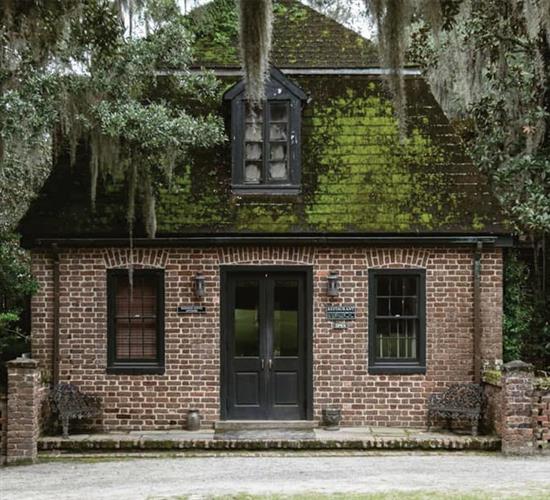
Freeman echoes these sentiments, and when asked if there was a moment during the filming of her documentary that made her feel she had truly “found” Edna Lewis, Freeman remarks, “At Middleton Place. Walking the same path that Edna once took each day was emotionally heavy, and I felt her overwhelming presence there.”
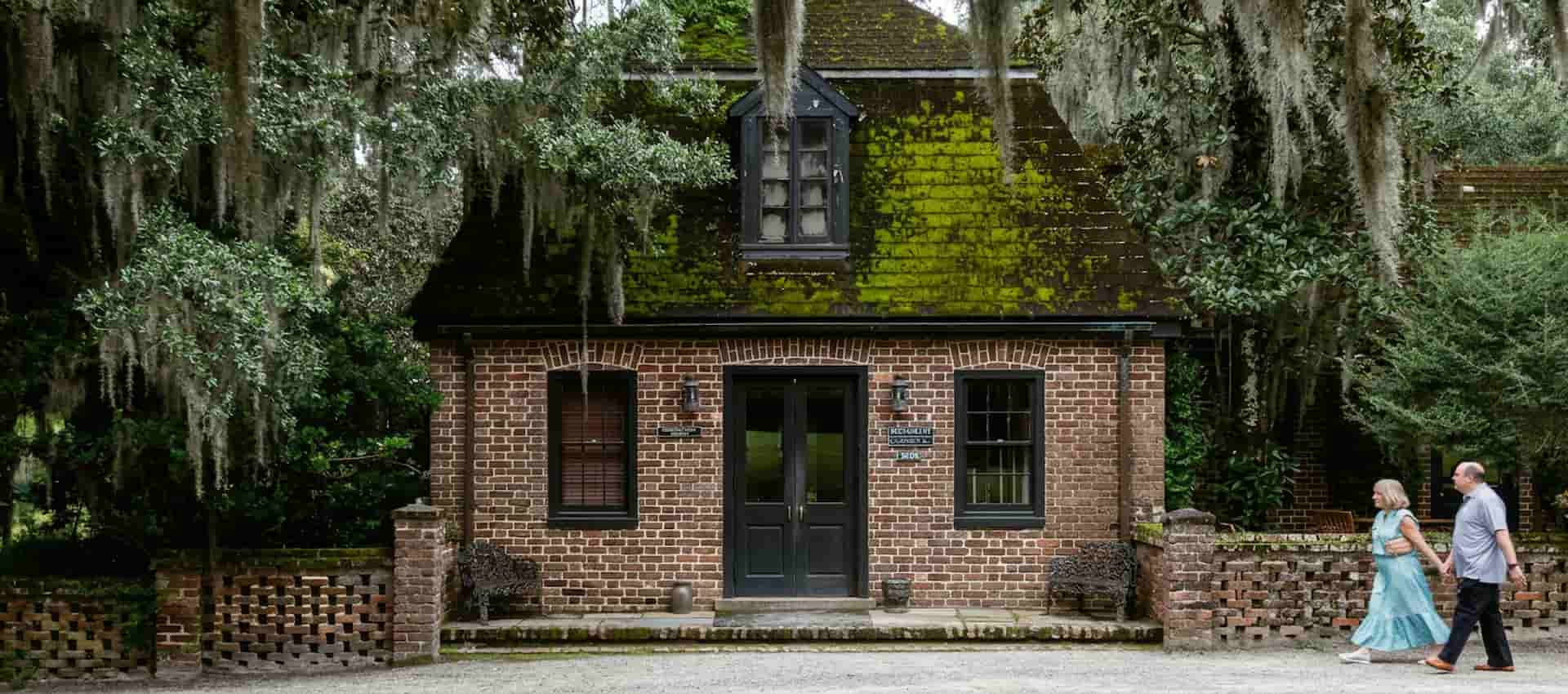
From 1985 to 1987, Lewis served as Chef-in-Residence at the Restaurant at Middleton Place, crafting dishes rooted in the traditions of Lowcountry cooking. Lewis walked each day between the millhouse, where she lived, and the restaurant, her presence layered over the history of the enslaved people who had labored on that same ground.
When Lewis returned to New York as executive chef at Gage & Tollner in 1988, she brought with her dishes like Lowcountry shrimp and grits and she-crab soup — items she perfected during her time at Middleton Place and that remain on the menu today.
After leaving Gage & Tollner in 1992, Lewis moved to Georgia, where she lived with her friend and fellow chef, Scott Peacock. Together, they published her fourth and final cookbook in 2003, “The Gift of Southern Cooking: Recipes and Revelations from Two Great American Cooks.” Lewis died a few years later, in 2006, but her work remains as vital as ever. Through her graceful prose, she showed us that food is not only nourishment but a narrative that binds us to memories, heritage, and the generations who paved the way.
Salamander Collection, in partnership with Bennett Hospitality, now manages the 55-room Inn at Middleton Place and its historic restaurant, overlooking the Ashley River near Charleston, South Carolina. Providing a brief snapshot into the life of Edna Lewis, the Southern veranda-style restaurant features a large portrait of Lewis and Southern fare like sweet tea-brined pork chops and braised collard greens.
Contact Us
For advertising inquiries, please contact [email protected]