




profile
Into The Wild
Foraging hikes with ecologist Clay Morris allow guests at Salamander Middleburg to discover how to find and prepare edible native plants.
By Renee Sklarew
It's Late November in Middleburg
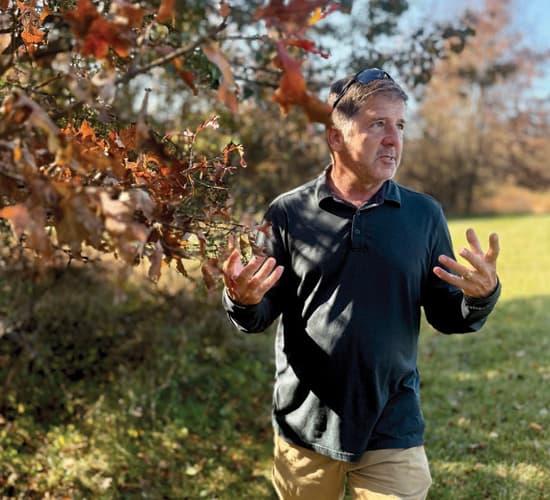
Virginia, and the rustling trees surrounding Salamander Middleburg have changed from verdant green to shades of gold and scarlet. Standing inside the hotel’s gazebo is Restoration Ecologist Clay Morris with a small group of visitors interested in native plants and foodways.
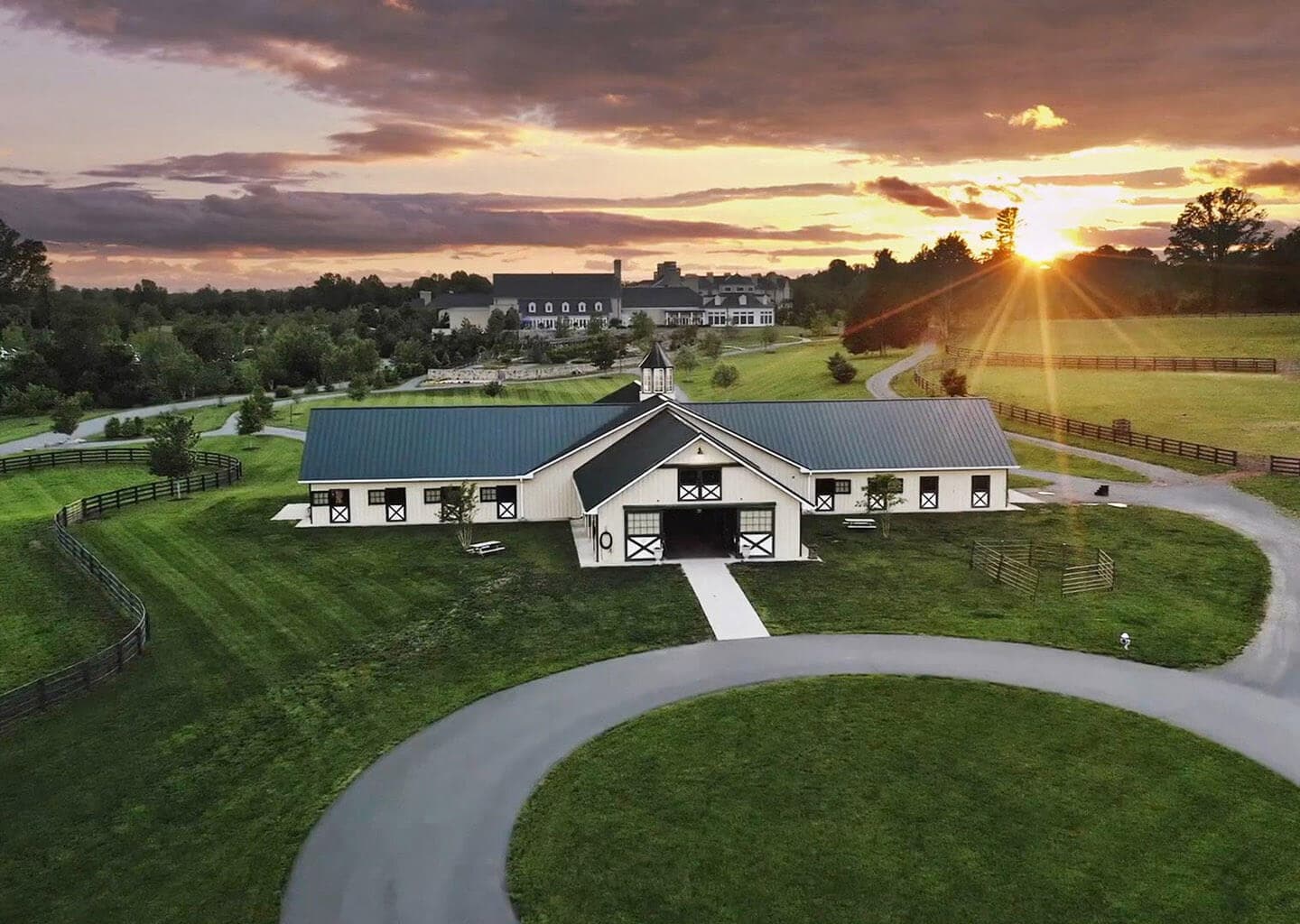
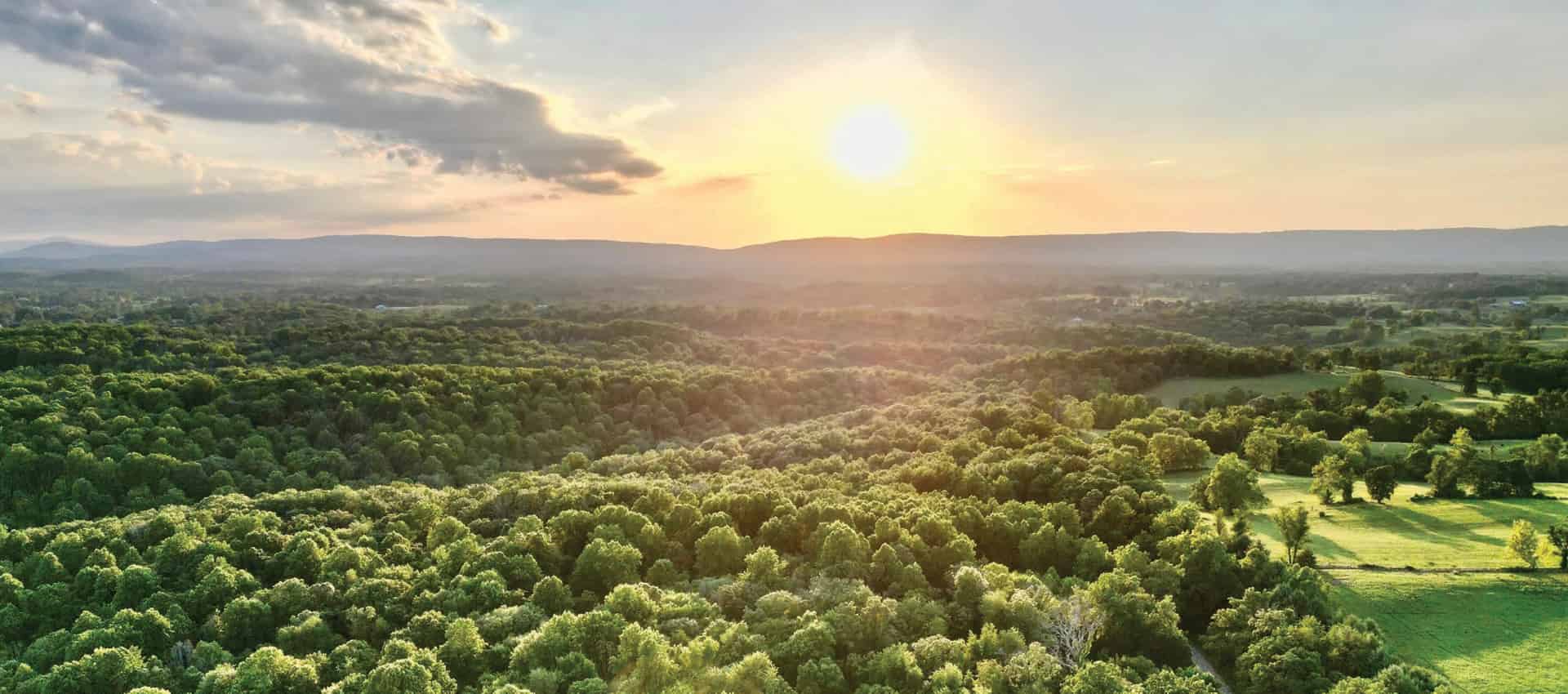
Salamander Middleburg hosts twice-monthly Foraging Hikes from April through early-November. Along with ziplining, equestrian activities and archery, these guided hikes provide an immersive outdoor experience within the resort’s 340 acres.
Morris says they spend 90 minutes learning about foraging and then try food he’s prepared for them. He describes Virginia’s three foraging seasons: early into the spring mushrooms arise, along with greens like ramps and dandelions. Summer is the fruit and vegetable phase, including berries, milkweed pods and persimmon. By autumn, look for roots, nuts and tubers, such as sunchokes, hickory nuts and walnuts.
To an untrained eye, it’s difficult to imagine this elegant resort yields such a bounty of edible plants.
THE ROOTS AND BOUNTY OF FORAGING
Food writer Nevin Martell is the author of the forthcoming book, "How to Eat Foraged Food Without Dying" (Storey Publications). "Foraging is not a passing fad," says Martell. "It is the oldest form of gathering sustenance. Humans have relied on hunting and foraging as a way of survival since the beginning of time."
The rising interest in foraging was partly fueled by a fascination with unique culinary cultures. "Foraged foods offer a distinct taste of moment and place, and they can be unpredictable from year to year," Martell explains. "Wild foods deliver an intensity and freshness, making each experience impossible to replicate elsewhere."
Martell has foraged for mushrooms in Australia and wild fruit in South Carolina. He says while people can research online and in guidebooks, foraging is an oral tradition passed down by generations. "It will always be a skill best learned from another person."
Kitchen Confidential
Foraged ingredients blend in so well, diners don't usually realize they're eating them. "At Salamander Middleburg, our cooking at Harrimans is shaped by the land, the seasons, and the variety of ingredients found right here in Virginia's Piedmont," explains Chef de Cuisine Bin Lu. "Foraging allows us to work with flavors that reflect this place in its purest form — spring morels and ramps, autumn spicebush, wild berries, and other surprises that only reveal themselves if you know where to look."
The Magic of Foraged Plants
At Salamander Middleburg, miles of trails wind through prairie grass and historic woodlands, but the Foraging Hike begins in a wildflower meadow. "Often times in restoration ecology, we're planting for the bugs and bunnies, but if a wild plant pops up, I'm going to encourage it. The more diverse an ecosystem is, the more stable it is," Morris says.
He lifts a spindly plant from its roots and offers a pungent sniff of its heart shaped leaves. "Garlic mustard is very common and invasive, probably one of our worst weeds. I figured if you're pulling it, you might as well try eating it, and suddenly, I discovered, it really tastes good."
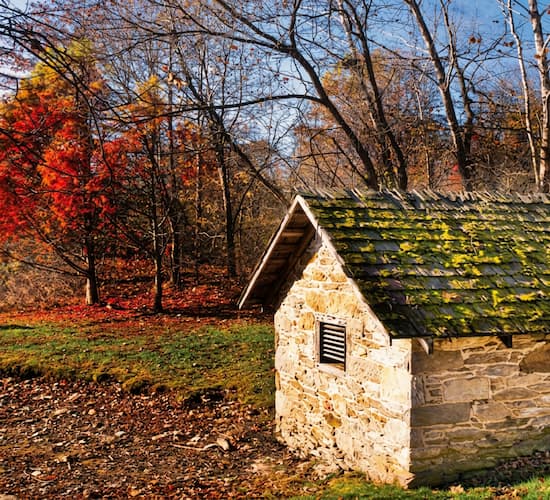
Morris ducks into a springhouse dating back to the 1700's beside a pond filled with lilies. A wood frog startles from its perch. He says long before settlers came and planted wheat and corn, Virginia's Native Peoples passed through to fish, hunt and gather plants for food and medicine.
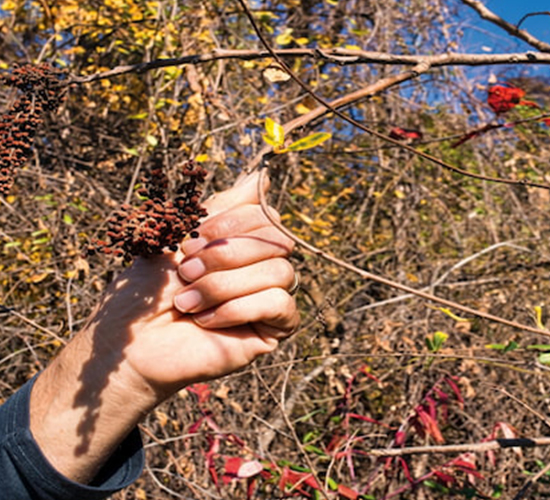
Crisscrossing a paved pathway, Morris ushers his group toward a tangle of shrubs and bushes. Morris points to a tiny male pinecone on a Virginia pine, sharing how he pickles them for a garnish and puts pine needles in vinegar to make salad dressing. He combines sumac berries, sugar and lemon juice to make a tart lemonade. Morris's recipe for "hunter's marinade" blends juniper berries, garlic, red wine and savory herbs for an "arboreal, Bambi-running-through-the-woods" taste.
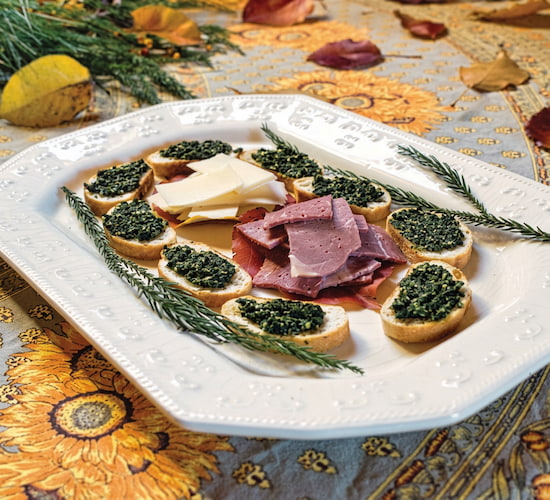
The tour ends at the 100-year-old Stallion Barn with a spread of appetizers crafted from foraged plants. Slices of French bread are brushed with bright green pesto made from mustard greens and asiago cheese. Crostini is topped with walnut pâté and miniature pinecones, that Morris says, "give a little pop, a little tart, a little brightness." Cucumber slices become vessels for smoky trout mousse caught in a nearby mountain stream adorned with a sprinkle of elderberry capers.
Despite such unfamiliar ingredients, there is no hesitation among the guests. They feast on the foraged treasures, each one bursting with flavor, texture and the terroir of these bucolic surroundings.
Mountain Foraging at Aspen Meadows
Besides jaw-dropping views of the Rocky Mountains, West End Social at Aspen Meadows Resort showcases ingredients sourced from farmers and foragers. "Local food is the heart of what we do," explains General Manager Carrie Williams. "Colorado's growing season may be brief, but it's filled with remarkable ingredients."
Depending on the season, diners may find porcini mushrooms, pine tips, choke cherry blooms or berries on the menu. "Thanks to our 40 acres of natural surroundings, we're able to forage right here at home and highlight those finds in guest experiences," adds Williams. "Each year brings fresh inspiration, and we look forward to discovering what the mountains have in store."
Foraged ingredients from the mountains make it to the tables at West End Social at Aspen Meadows Resort.
Contact Us
For advertising inquiries, please contact [email protected]