Back to Salamander Adventures
Q&A with darren hartford, Founder, oliver pluff & Co.
Steeped in Tradition
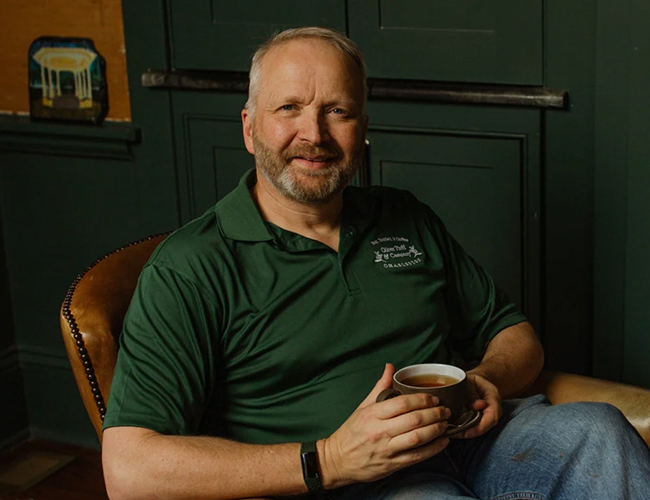
About Darren Hartford
Founder, Oliver Pluff & Co.
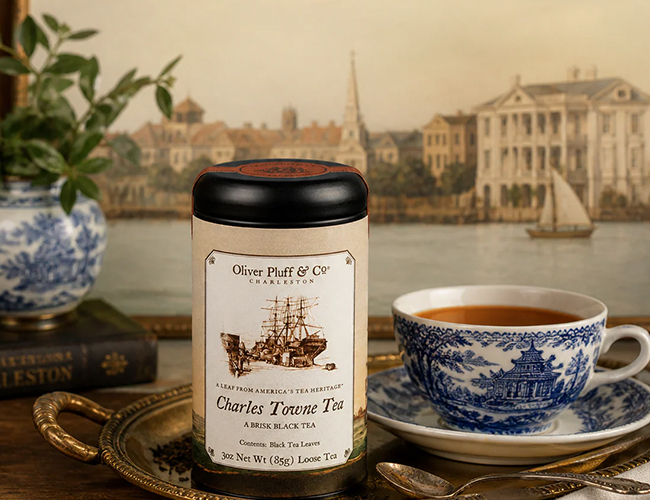
Darren is the founder of Oliver Pluff & Co., a Charleston-based tea company dedicated to preserving the tradition of time-honored teas, early American coffee blends, and historic beverages. Darren spent 28 years in the Air Force as a pilot and retired from the service in 2017 as a Brigadier General. He and his family settled in Charleston, and he purchased Oliver Pluff & Co. in the spring of 2018. Through careful research and thoughtful sourcing, Oliver Pluff & Co. connects modern tea drinkers with the flavors, customs, and stories of early America. Each tea is selected not only for its quality, but also for the history it helps tell.
Based in Charleston, South Carolina, Oliver Pluff & Co. continues to share America’s tea heritage through historically inspired teas, coffees, toddies, educational content, and specialty gifts.
Explore Oliver Pluff & Co. about About Darren Hartford
What first sparked your interest in exploring the connection between tea and American history?
Were there any surprising discoveries along the way?
Oliver Pluff & Co. started with a couple of simple questions: What tea was thrown into Boston Harbor during the Boston Tea Party? And what did people drink when they were done?
Trying to answer those questions led us into the teas, coffees, toddies, and wassails that were part of early American life. We realized pretty quickly that tea was one of the most overlooked ways to experience the Revolutionary era. So much of that history is told through battles, politics, and famous names, but tea was part of the everyday fabric of that world.
One of the surprising discoveries was how quickly the story moved beyond Boston. Charleston had its own tea protests. Tea was not just something people drank. It was tied to commerce, hospitality, politics, and the question of whether the colonies had a voice in their own affairs.
How did you uncover the story behind Martha Washington's favorite tea?
What drew you to recreate it for modern tea lovers?
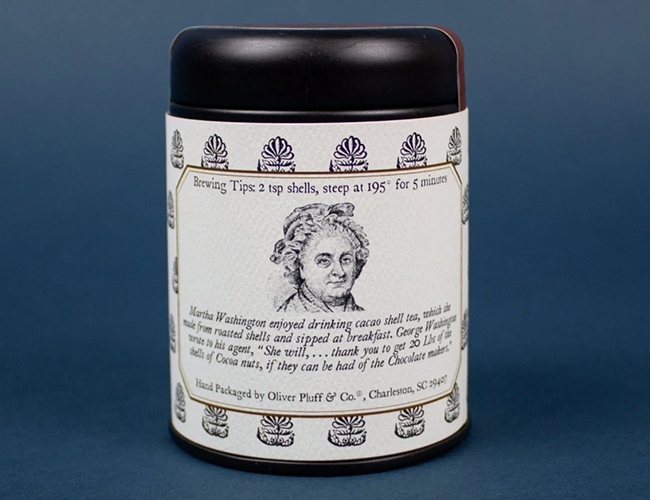
Martha Washington’s Cacao Shell Tea came out of researching what people were actually drinking in the homes of early America. While looking for references to tea in the founding fathers papers, we found a letter from George to his agent asking him “...to get 20 LBS of the shells of Cocoa nut, if they can be had…” for Martha. The Washingtons were known to enjoy chocolate, and Martha Washington favored a lighter drink made by steeping roasted cacao shells in hot water.
We were drawn to it because it was both historic and very approachable. It is not something you have to explain too much once someone tastes it. It has that soft cacao aroma, but it is a lighter texture as you drink it compared to hot chocolate and naturally suited to being served like tea.
For us, recreating it was a way to bring a domestic piece of early American life back to the table. It is connected to a very familiar historical figure, but it also shows a more personal side of the period: what people served, shared, and enjoyed at home.
The Boston Tea Party is one of the most iconic moments in American history. How have you interpreted that event through tea?
What do you hope people take away when they experience your Boston Tea Party blend?
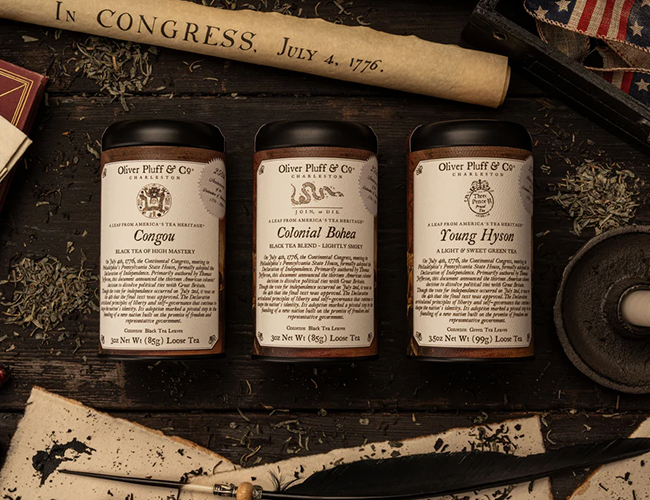
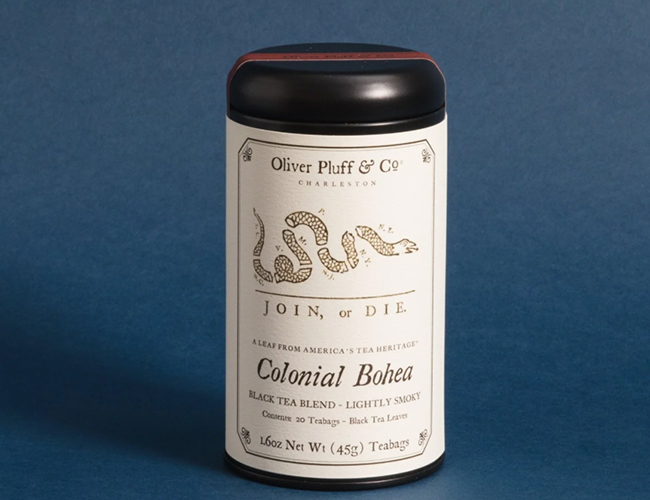
The Boston Tea Party is usually talked about as a political protest, which it was, but at the center of it was tea: Bohea, Congou, Souchong, Hyson, and Singlo.
Bohea was one of the most common teas in colonial America and made up a significant portion of the tea destroyed in Boston Harbor. In researching that period, we found historic references that helped us understand what Bohea would have been and how to recreate a tea in that style. The goal was not to make a novelty product, but to give people a way to taste something connected to the world of 1773.
I hope people come away realizing that history is not always far away or abstract. Sometimes it is in ordinary things, and tea gives people a tangible way to understand the period. You can read about the Boston Tea Party, but tasting a tea connected to that event makes the story feel much closer.
How has Charleston influenced your approach to tea and storytelling?
A city known for its rich culture, hospitality, and appreciation for tradition.
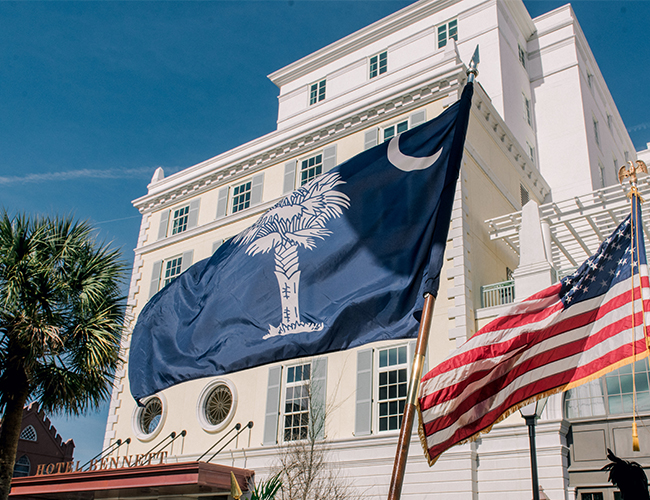
Charleston also has its own tea protest history, which many people do not know. In 1773, Charleston received tea under the Tea Act just as Boston did, but the response here was different. The tea was confiscated and stored in the basement of the Old Exchange rather than destroyed. Later, Charleston refused additional tea from landing, and in 1774, tea that reached the harbor was destroyed under pressure from local merchants.
That history influences the way we talk about tea. Charleston understands preservation, hospitality, and layered history. It is a city where people are interested in what came before, but they also want to experience it in a living way. Tea fits that perfectly. It belongs to the table, to conversation, and to hospitality.
As our nation marks 250 years, why do you think it's important to preserve and share stories through traditions like tea?
Celebrating America 250
As we mark 250 years of American history, I think it is important to look at how people actually lived: what they drank, what they served, how they welcomed guests, and what customs they carried with them.
Tea gives people an approachable way into that history. It leads to practical questions: Where did it come from? Who was drinking it? Why did it matter?
Preserving these traditions gives people another way into the story. Not everyone connects first with dates and documents, but most people understand the feeling of sharing a drink, hosting company, or sitting down for a conversation. Tea makes history tangible. That is what we try to do at Oliver Pluff & Co. - bring the flavors and stories of early America back into people’s hands.