



profile
A Museum of our Time
By TERENCE LOOSE
The newly opened international African American Museum is a living testament to the triumphs and tramas that have shaped the African American journey — and America's.
In the heart of Charleston,
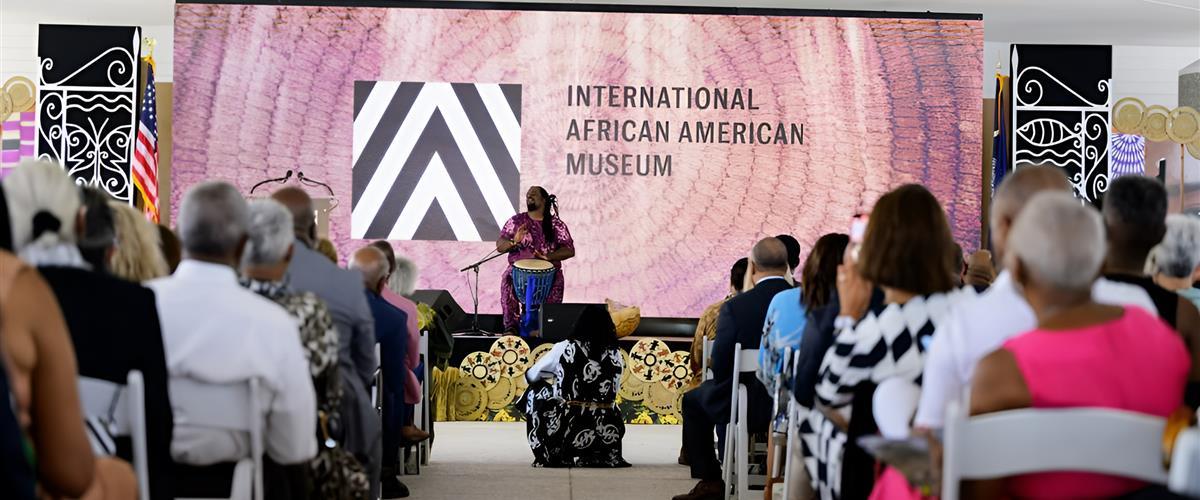
South Carolina, the International African American Museum (IAAM) has risen to celebrate the intricate tapestry of the African American journey. Located in Gadsden’s Wharf, a place where more than 100,000 enslaved Africans entered America and, at one time, the country’s busiest slave trading port, the IAAM does more than educate the public on the darkest days of the African American experience. Instead, the IAAM stands as a testament to the resilience, triumph and enduring spirit of a community and how that shaped our nation.
“We often talk about the African American journey living at the intersection of triumph and trauma, great pain and great joy. And you can certainly see that evidenced in a city like Charleston, and I’m excited that an institution like ours gets to exist in this space,” says IAAM Chief Learning and Engagement Officer Malika Pryor-Martin,.
She adds that the IAAM is not just a physical structure, it is a living narrative that unfolds the stories of African Americans throughout history. As visitors step through its doors, they are transport-ed into a realm where the struggles and achievements of a community are not just artifacts but living, breathing testaments to the human spirit.
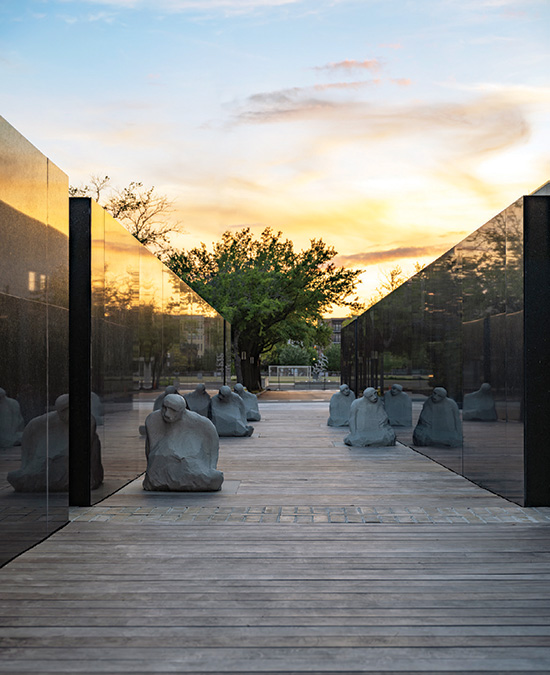
It begins with the structure itself. Hovering 13 feet above the ground, the museum grounds are the site of the African American Memorial Garden, literally a living testament to a people’s history. One of most impactful elements of the garden is The Tide Tribute, which is made up of relief figures, each representative of a man, woman or child who laid shackled in the holds of ships once anchored in nearby Charleston Harbor. As the tide changes, the shapes of those it honors are hidden and revealed, emphasizing the fluidity of the past, present and future.
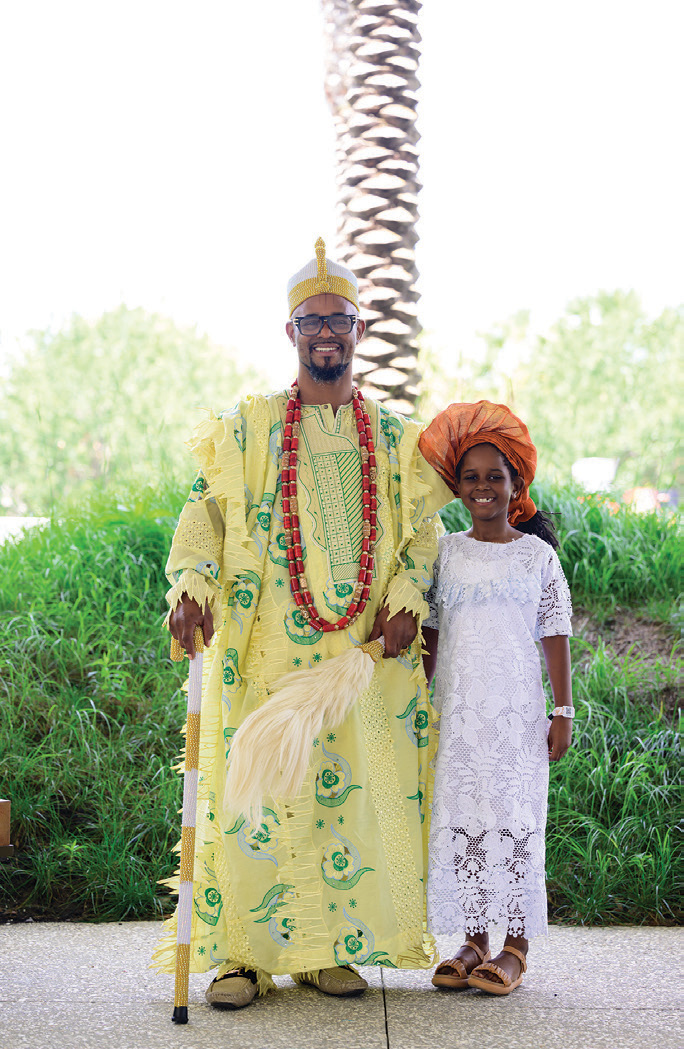
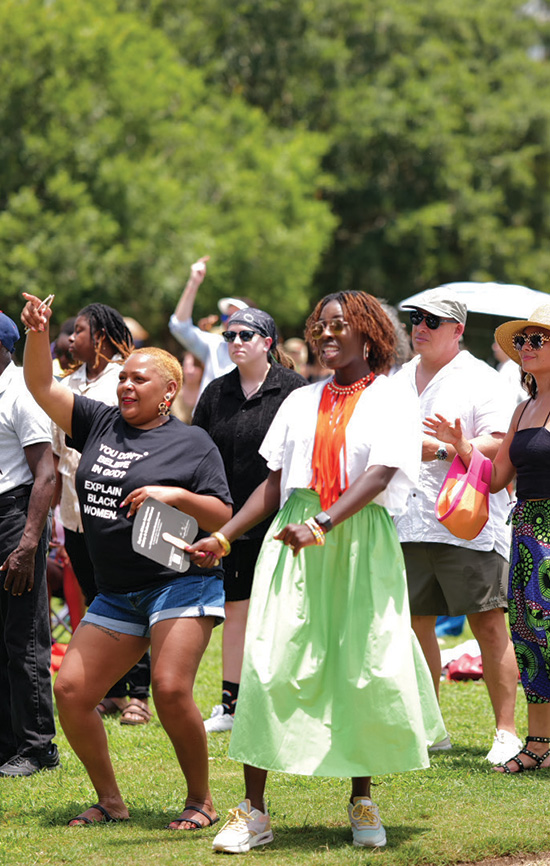
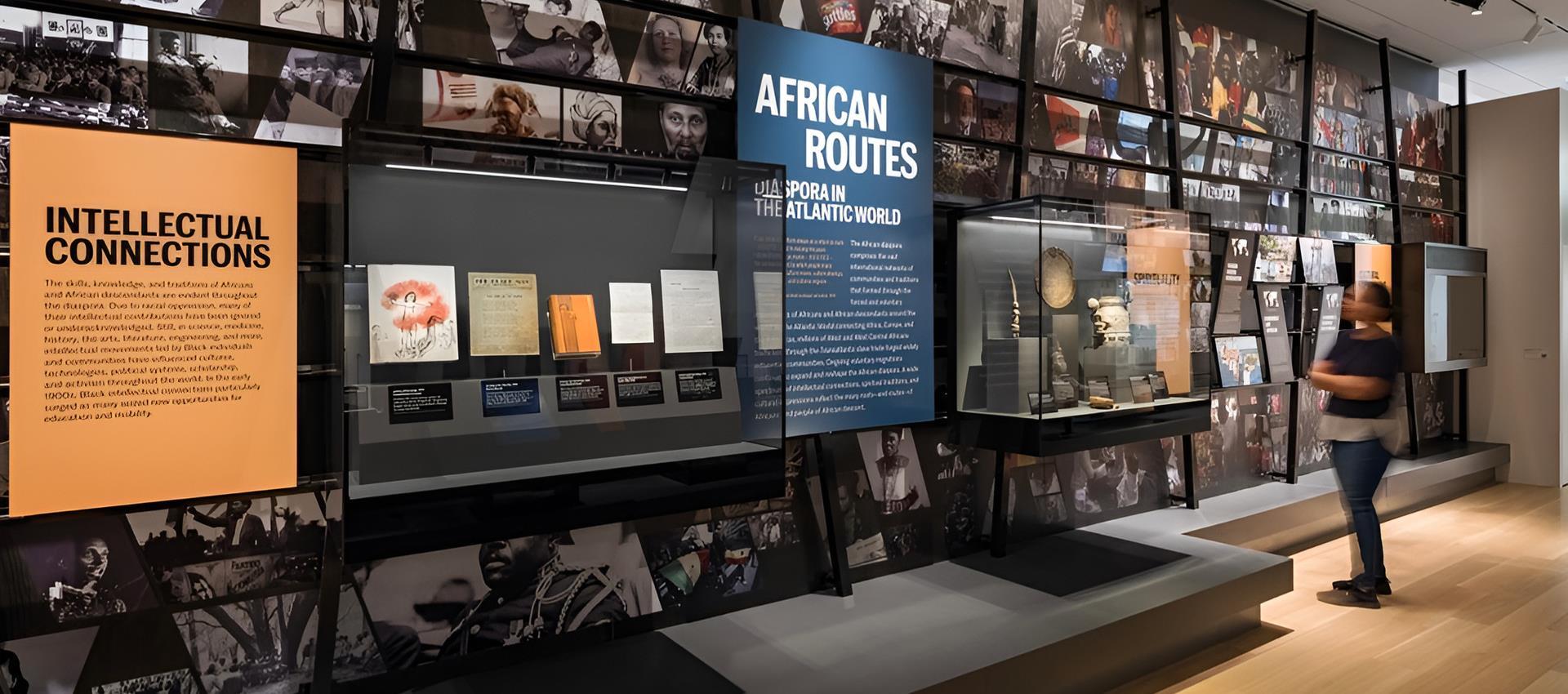
NOT JUST A “SLAVERY MUSEUM ”Too often, when people use or hear the phrase “the African American experience,” it translates to “slavery.” And while that is certainly an important and needed focus of the museum, it is – by far – not the only one. Instead, the IAAM documents the entire African American experience, from the days of enslavement and the fight for freedom to present day achievements and contributions of the African American community and America itself. Each exhibit in its 11 galleries is a chapter in a larger narrative, a story that refuses to be defined solely by adversity but rather shaped by the profound strength that emanates from resilience.
“People are not defined by their circumstances alone,” Pryor-Martin says. “We don’t stop being human beings merely because we’re facing difficulty. People fall in love. They build families. It’s under harrowing conditions, but they do it nonetheless.” So, while the dark history of the slave trade is certainly on display, in various mediums, so is the story of a people whose spirit could not be broken, who embraced life, family, community, even while under great oppression and, in so doing, shaped the American experience as much as America shaped theirs. The museum goes beyond the surface of historical accounts and delves into the very essence of humanity – the stories of love, resilience and the unyielding determination to build meaningful lives despite the challenges faced.
In so doing, says Pryor-Martin, visitors leave not just with a deeper understanding of the history and culture of a people, but with probing, meaningful questions anyone can relate to. “What does it compel and inspire someone to do when they’re fighting for the people they love? What does it look like when the concept of love is expanded to community? What is someone willing to do when they believe in the unequivocal right of their neighbor and their brother or sister to be free and to be treated and identified as human beings?” she asks. These are not just the questions for our time, but for all times. So, as visitors explore exhibits that depict the creation of families, the forging of bonds and the building of communities, they witness the indomitable spirit that has sustained the African American community throughout history. The concept of love expands beyond personal relationships to encompass the collective love for community and the relentless pursuit of freedom and equality.
In this way, the museum hopes to connect with visitors on a human, emotional level. In some ways, it’s an attempt by ahistorical museum to remove the history bias. “So often when we contemplate history, we’re contemplating it on a timeline. We are contemplating it in this sort of grand sweeping way and we lose the humanity,” Pryor-Martin says. She notes that, in doing this, we can lose the fact that people are making history in the moment, unsure of outcomes or, often, what is happening outside their community. “They are making it sometimes, just in their small neck of the woods. We read it on a timeline as if it is inevitable, but they’re experiencing it as human beings. And so, we strive to bring a bit of that, because not only does it further humanize individuals and a group of people who have historically been dehumanized, it also facilitates this opportunity for a visitor, no matter their background, to be able to identify with a fundamentally human story,” she says.
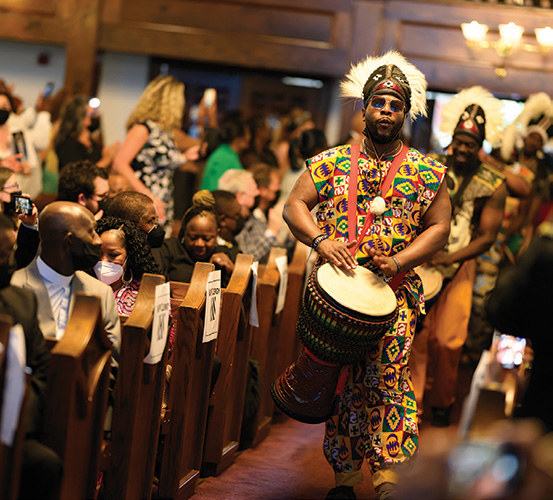
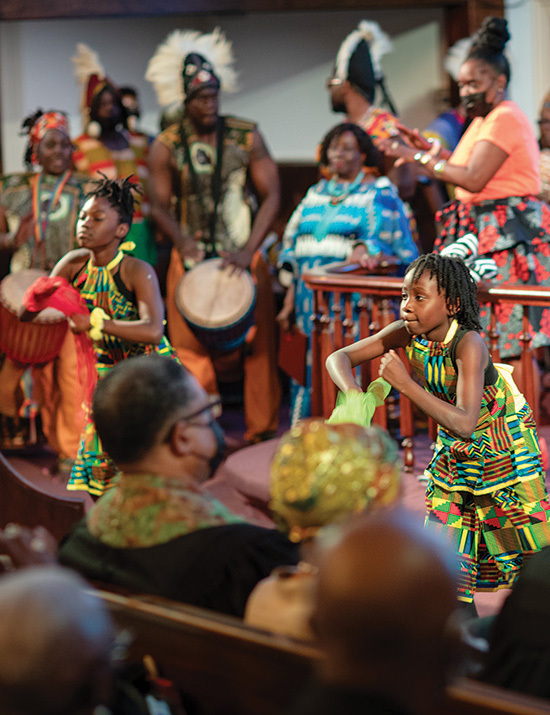
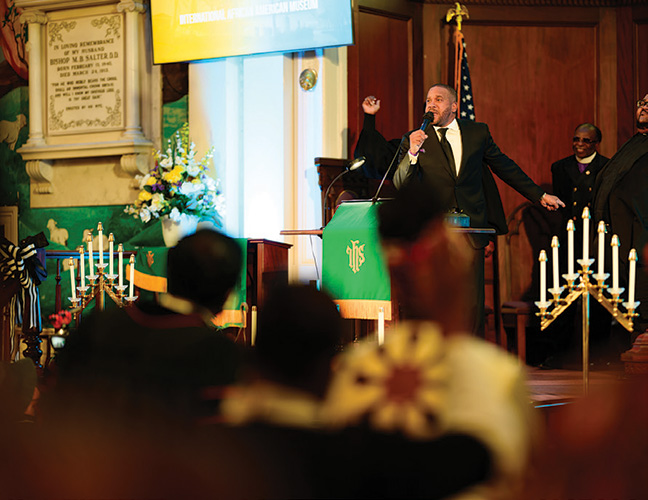
A NECESSARY DIALOGUEIN CHALLENGING TIMES While the IAAM hopes to inspire dialog, understanding and illumination, there is no doubt it comes in challenging times, when a disturbing number of voices are attempting to revise or even deny history. The museum confronts the dangers of nostalgia and revisionist history, emphasizing the importance of acknowledging and learning from the complexities of the past. The exhibits are not just a retelling of events; they are a call to question preconceived notions and engage in a dialogue that transcends biases. “We are navigating a moment when historical facts are being challenged in favor of nostalgia, which can be very, very dangerous,” Pryor-Martin says. But, she adds, that just makes the museum’s mission even more vital. By presenting a full and authentic portrayal of African American history, the IAAM challenges the idea that the lack of personal experience equates to nonexistence. It invites visitors to confront uncomfortable truths, fostering a deeper understanding of the struggles, achievements and contributions of the African American community.
MONEY TALKS Perhaps there is no better metric to gauge belief in a project in modern America than money. And if that’s true, the IAAM comes through with flying colors. In the making for more than 20 years, the project gained supporters from every corner of the country, raising over $100 million toward its completion. From Congressman Jim Clyburn and Civil Rights icon John Lewis to founding donors Salamander Collection CEO Sheila Johnson and local hotelier Michael Bennett, support for the museum was as eclectic as it was determined. They, along with dozens more like them, defied what many said would – could –never happen. But then, that seems a most fitting testament to the museum’s mission. Triumph through adversity. Strength from uncertainty. “I think about our existence, particularly in this moment. And in Charleston, a space where folks might think the existence of a $100 million-plus capital project that centers [on] the African American journey couldn’t exist,” Pryor-Martin says. “And yet, here we are.”