

profile: Pickleball
Pickleball Travel
By DANTE AMODEO
The fastest growing sport in the nation is on the travel fast track.
PICKLEBALL ENTHUSIAST
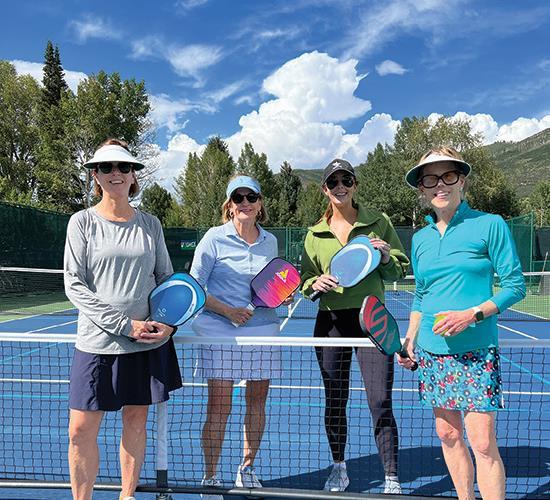
Often, pickleball's small-sided arena inspires more camaraderie than cut-throat competition, so even the more timid or self-proclaimed "unsthletic players can find great enjoyment.
Bryan Fox, director of racquet sports at Innisbrook Resort, adds, "Pickleball is approachable and not as intimidating as other sports. Shorter games allow for fast rotations and a more social experience. The smaller court and simple-to-learn wing path allows players to start playing almost immediately."
Many have also picked up on the social allure of the game. The wide net of pickleball seems to catch everybody and to not embrace it creates a sense of FOMO. "It doesn't matter if someone's never played a racket sport or it's Roger Federer, everybody from all walks of life, age groups, backgrounds and demo graphics want to play and try it," says Rebeis, "and everybody knows somebody who's playing it and they don't want to be left behind."
The evidence shows that this isn't merely a domestic fad. Notably, there are talks of broadcasting exhibition games at the upcoming Olympics to christen the sport on the world stage.
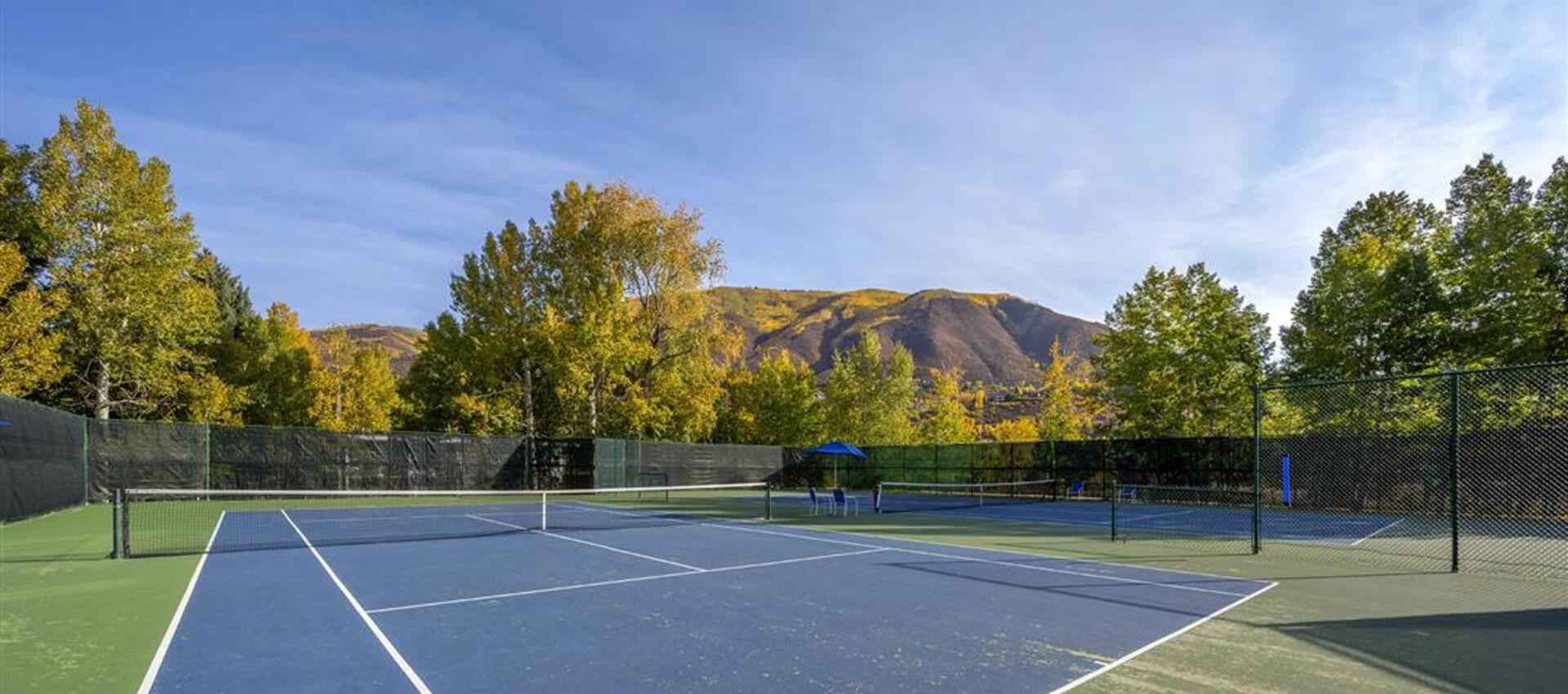
The numbers only indicate further growth, Rebeiz says. "Of all the classes 1 run, our Learn to Play Pickleball clinics have been the most popular. I don't know where it'll end up at the end of this calen dar year, but the trajectory is straight up and we're seeing it. I mean, we've had to build and convert 10 courts in our resort to meet the demand of our clients."
Whether you're a seasoned veteran or a sparkly eyed newcomer, the experts who run pickleball at various Salamander properties have invaluable knowledge to share. And for those who don't have a clinic planned in the very near future, here is a sample from their arsenal of tips.
TIPS FROM PICKLEBALL EXPERTS
ALEX REBEIZ (ASPEN MEADOWS RESORT)
FOR THE BEGINNER:
"The beginner needs to learn the kitchen [the soft game] first, because that's where the game is won. You're not going to win a match of doubles from the base-line. It's just not going to happen."
FOR THE ADVANCED:
"Spend time mastering the transition. zone. That's the transition between the baseline and the kitchen. Spend a lot of your time in that space, which, in tennis, we call 'no man's land! You're not supposed to spend time there in tennis, but in pickleball, you need to master it. You have to be able to handle incoming balls in this position, whether they're hit at you soft or hard. So, you need to practice volleys, half-volleys as well as the drops into the kitchen."
BRYAN FOX (INNISBROOK RESORT)
FOR THE BEGINNER:
"Don't get overwhelmed with scoring rules. Just remember: Don't volley in the kitchen [the painted, non-volley zone]."
FOR THE ADVANCED:
"Do not speed up the ball unless the shot is truly there. This requires a lot of patience. But remember, more points are lost on errors than won on winners! Also, instead of going for the obvious shot where space is open on the court, think about what shot is going to be most challenging for your opponent to hit. Usually this is a body shot or at the feet."
BRYCE SLICK (SALAMANDER MIDDLEBURG)
FOR THE BEGINNER:
"Stay out of the kitchen!"
FOR THE ADVANCED:
"Instead of looking for the 'kill' shot, just keep volleying and let the opponent make the mistakes."
Contact Us
For advertising inquiries, please contact [email protected]